B2B Exhibitions vs Digital Marketing: Which Generates Better Business Leads?
In today’s competitive business environment, generating high-quality leads is essential for sustainable business growth. Companies are continuously exploring innovative marketing strategies to connect with potential buyers, expand their networks, and increase sales opportunities.
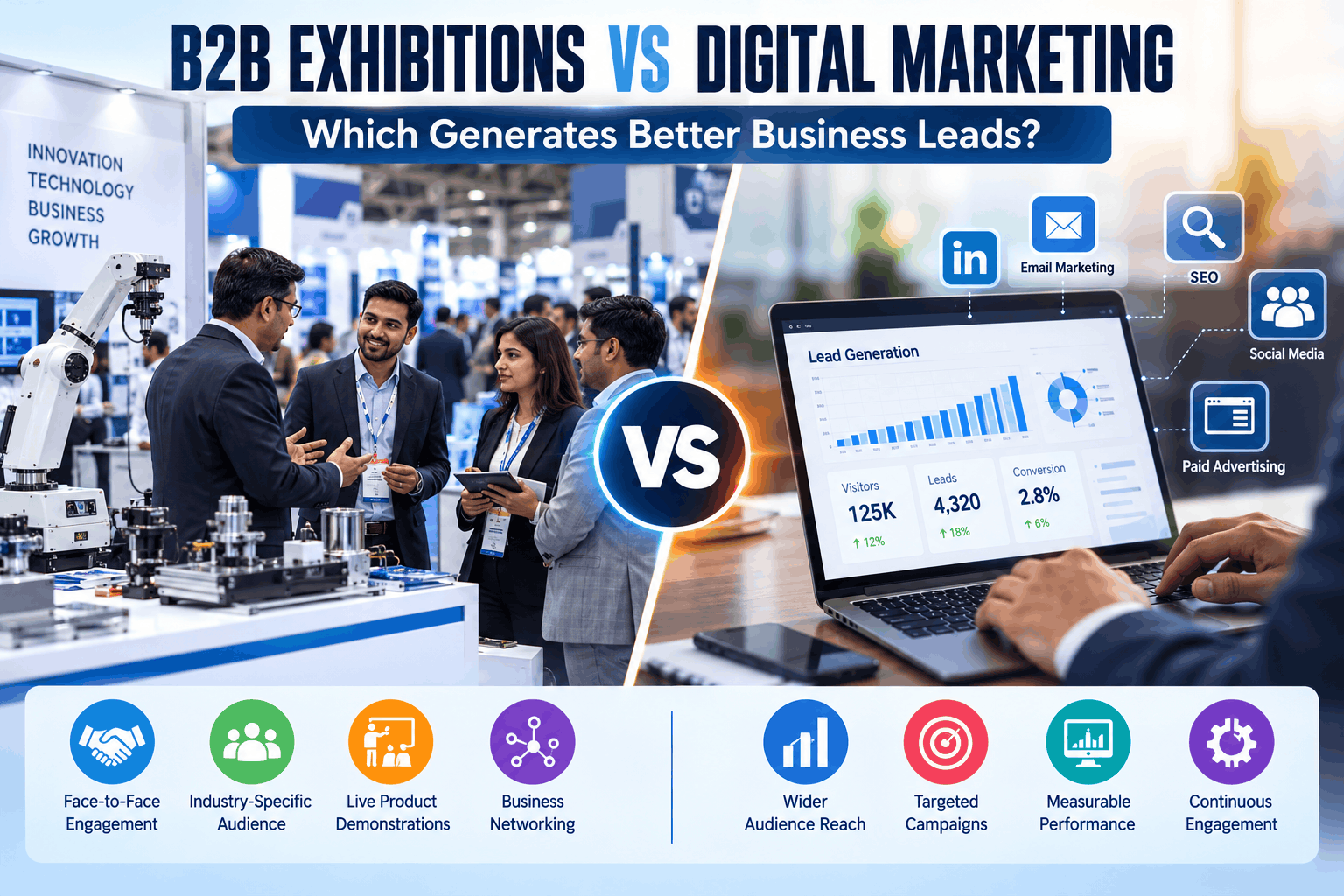
Two of the most widely used approaches are B2B exhibitions and digital marketing. While digital marketing enables businesses to reach a broader audience through online platforms, B2B exhibitions provide opportunities for face-to-face interactions, product demonstrations, and direct engagement with industry professionals.
But which approach generates better business leads?
The answer depends on business objectives, target audiences, sales cycles, and the quality of engagement. Understanding the strengths of both approaches can help companies develop more effective lead-generation strategies.
Understanding B2B Exhibitions and Digital Marketing
What Are B2B Exhibitions?
Business-to-business (B2B) exhibitions are industry-focused events where manufacturers, suppliers, technology providers, distributors, buyers, and industry professionals come together to explore products, discover innovations, and establish business relationships.
These exhibitions create a professional environment where companies can showcase their capabilities and interact directly with potential customers, distributors, investors, and business partners.
Unlike traditional advertising, exhibitions provide opportunities for real-time discussions, product demonstrations, and immediate business inquiries.
What Is Digital Marketing for B2B Businesses?
Digital marketing refers to promoting products and services through online channels such as search engines, websites, social media platforms, email marketing, and paid advertising.
For B2B companies, platforms such as LinkedIn, Google Search, and industry-specific websites play important roles in generating awareness and attracting potential customers.
Digital marketing allows businesses to target specific audiences, measure campaign performance, and maintain regular communication with prospective buyers.
B2B Exhibitions vs Digital Marketing: Key Differences
Both approaches contribute to business development, but their methods of generating leads differ significantly.
| Factors | B2B Exhibitions | Digital Marketing |
|---|---|---|
| Audience reach | Concentrated, industry-specific audience | Broad, potentially global audience |
| Lead generation | Direct business interactions | Online inquiries and conversions |
| Engagement | Face-to-face communication | Digital communication |
| Product experience | Live demonstrations | Videos, websites and virtual presentations |
| Trust building | Personal relationships | Consistent online engagement |
| Cost structure | Event participation, travel and logistics | Advertising, content and platform costs |
| Lead follow-up | Direct meetings followed by sales outreach | Automated and personalized nurturing |
| Performance measurement | Qualified meetings, opportunities and deals | Traffic, inquiries, conversions and attribution |
The key difference is that exhibitions focus on direct engagement, while digital marketing provides continuous visibility and scalable customer outreach.
Why B2B Exhibitions Generate High-Intent Business Leads
1. Face-to-Face Interactions Build Stronger Business Relationships
Personal interaction remains an important part of B2B business development, particularly when companies are making high-value purchasing decisions.
At exhibitions, exhibitors can communicate directly with buyers, understand their requirements, and discuss potential collaborations.
These conversations help businesses establish credibility, clarify customer expectations, and build relationships that may develop into long-term partnerships.
2. Direct Access to Industry-Specific Buyers
One of the major advantages of B2B exhibitions is the opportunity to connect with professionals interested in a particular industry.
Depending on the exhibition, participants may include procurement teams, manufacturers, distributors, technology specialists, government representatives, and business decision-makers.
For exhibitors, this concentration of relevant industry professionals creates opportunities to identify serious prospects and discuss business requirements.
3. Live Product Demonstrations Improve Buyer Understanding
For industries such as manufacturing, automation, robotics, electronics, industrial equipment, and emerging technologies, product demonstrations can influence purchasing decisions.
Exhibitions allow potential buyers to observe product capabilities, evaluate technical features, and interact with company representatives.
Such experiences can help businesses explain complex solutions more effectively than relying exclusively on promotional materials.
4. Business Networking Creates Additional Opportunities
Exhibitions offer more than customer acquisition.
Companies can connect with distributors, suppliers, technology partners, investors, associations, and other industry stakeholders.
These connections may lead to distribution agreements, strategic partnerships, technology collaborations, and opportunities to enter new markets.
How Digital Marketing Supports B2B Lead Generation
Digital marketing plays an equally important role in connecting businesses with customers throughout the buying journey.
1. Search Engine Optimisation (SEO)
SEO helps businesses improve their visibility when potential customers search for relevant products, services, technologies, or suppliers.
A well-optimised website can attract relevant inquiries over time and help companies establish an online presence in competitive markets.
2. LinkedIn Marketing
LinkedIn provides B2B businesses with opportunities to reach industry professionals, decision-makers, and potential business partners.
Through company updates, industry insights, targeted advertisements, and professional networking, businesses can strengthen brand credibility and generate leads.
3. Email Marketing and Lead Nurturing
Email campaigns help companies maintain communication with prospects by sharing product information, updates, case studies, invitations, and business offers.
Consistent follow-ups can support relationship development and encourage potential buyers to move towards purchasing decisions.
4. Paid Digital Advertising
Search engine advertising and social media campaigns help companies promote their offerings to selected audiences.
These campaigns can generate measurable website traffic and inquiries, making it easier to evaluate marketing performance and adjust campaigns.
Lead Quality vs Lead Quantity: What Matters More?
One of the biggest challenges in B2B marketing is determining whether a large number of leads actually translates into meaningful business opportunities.
Digital marketing campaigns can generate substantial numbers of inquiries, but not every inquiry represents a qualified buyer.
Similarly, exhibitions may generate fewer contacts than large-scale online campaigns, but direct conversations can make it easier to assess buyer requirements, purchasing intent, and potential business value.
For businesses dealing with industrial products, technology solutions, machinery, and specialised services, lead quality often matters more than lead quantity.
A qualified prospect who has a genuine requirement, purchasing authority, and an appropriate budget may be more valuable than numerous unqualified inquiries.
Therefore, businesses should evaluate leads based on their potential to become customers, rather than relying solely on the total number of contacts collected.
Comparing Cost, Conversion Opportunities and Return on Investment
The effectiveness of a lead-generation strategy should be evaluated through measurable business outcomes.
B2B exhibitions involve expenses such as stall bookings, booth construction, travel, logistics, staffing, and promotional activities. However, participation can create multiple opportunities for direct engagement within a concentrated period.
Digital marketing budgets may include advertising, website development, SEO, content creation, and marketing software. Campaigns can be monitored and adjusted continuously, offering flexibility and ongoing reach.
To evaluate return on investment, businesses should measure:
- Cost per qualified lead
- Number of meaningful buyer meetings
- Sales-qualified opportunities
- Lead-to-customer conversion rate
- Revenue generated from new business
- Long-term customer and partnership value
Rather than assuming that one channel always delivers better results, companies should compare their actual costs and business outcomes over a suitable sales period.
Why Combining B2B Exhibitions and Digital Marketing Can Deliver Better Results
Instead of treating exhibitions and digital marketing as competing strategies, businesses can use both approaches to create a stronger lead-generation ecosystem.
Before the Exhibition: Build Awareness
Businesses can use LinkedIn campaigns, email invitations, website announcements, search marketing, and industry media to promote their exhibition participation.
Pre-event outreach can help exhibitors schedule meetings with prospective buyers and encourage relevant visitors to their stalls.
During the Exhibition: Convert Interest Into Engagement
At the exhibition, companies can conduct live demonstrations, communicate with buyers, introduce new products, and discuss potential partnerships.
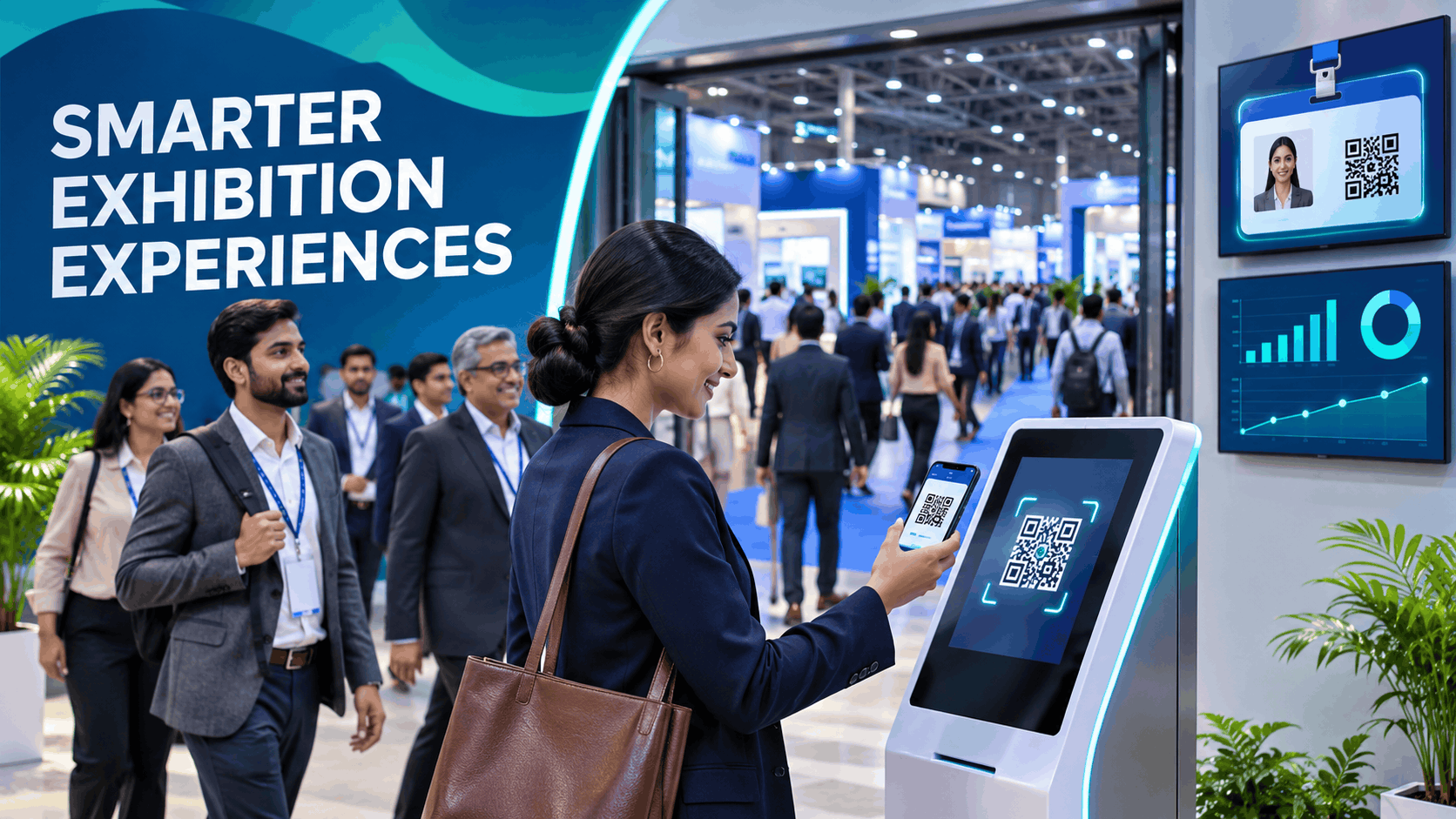
Digital tools such as QR codes, lead retrieval systems, electronic brochures, and CRM platforms can support efficient lead capture and qualification.
After the Exhibition: Turn Connections Into Business
Following the event, exhibitors can use email marketing, personalized communication, virtual meetings, and remarketing campaigns to reconnect with prospects.
Timely follow-ups and relevant product information can help move exhibition-generated contacts through the sales pipeline.
This integrated strategy combines the personal engagement of exhibitions with the continuous reach and measurable capabilities of digital marketing.
Which Strategy Should Your Business Choose?
The ideal marketing approach depends on the nature of your business and its growth objectives.
B2B exhibitions may be particularly valuable when your business:
- Offers industrial products, machinery, or complex technology solutions.
- Requires live demonstrations and technical discussions.
- Targets procurement professionals and industry decision-makers.
- Wants to develop distributor networks or strategic partnerships.
- Is exploring new markets and business collaborations.
Digital marketing may be particularly valuable when your business:
- Needs continuous market visibility.
- Targets customers across multiple geographic locations.
- Wants scalable campaigns with adjustable budgets.
- Offers products or services that buyers can evaluate online.
- Requires ongoing lead nurturing and audience engagement.
For many B2B organisations, the most effective approach is to integrate both channels according to their commercial goals and available resources.
Conclusion: Combining Business Connections With Digital Reach
B2B exhibitions and digital marketing both play important roles in generating business leads.
Digital marketing helps companies increase brand visibility, reach wider audiences, and maintain continuous communication with potential customers. B2B exhibitions create opportunities for direct buyer engagement, live product experiences, industry networking, and business relationship development.
For businesses looking to generate qualified leads and establish lasting industry connections, exhibitions can be a valuable component of their overall marketing strategy.
However, the greatest value often comes from combining both approaches.
Digital marketing creates awareness and sustains engagement, while B2B exhibitions turn relevant interest into meaningful business conversations.
By integrating physical exhibitions with digital promotion and structured follow-ups, companies can build stronger sales pipelines, create new partnerships, and unlock long-term business opportunities.
Looking to connect with industry professionals, showcase your innovations, and explore new business opportunities? Participate in relevant B2B exhibitions and transform valuable business connections into future growth.









Post Comment