How to Prepare Your Company for a B2B Exhibition: A Complete Guide for Exhibitors

Participating in a Business-to-Business (B2B) exhibition is an effective way for companies to showcase their products, connect with potential buyers, explore emerging market opportunities, and build long-term business relationships.
Whether you are a manufacturer, startup, technology provider, supplier, exporter, or established enterprise, exhibiting at an industry-specific trade show can help strengthen your brand presence and expand your professional network.
However, successful exhibition participation requires more than simply booking a stall and displaying products.
Strategic planning, effective marketing, professional booth presentation, and consistent follow-ups are essential to making exhibition participation a valuable business investment.
This comprehensive guide explains how to prepare your company for a B2B exhibition and maximize opportunities before, during, and after the event.
1. Define Clear Exhibition Goals and Business Objectives
Before participating in any B2B exhibition, companies should identify what they want to achieve.
Having clearly defined objectives helps businesses allocate resources effectively and measure the success of their participation.
Common exhibition objectives include:
- Generating Qualified Business Leads: Connect with potential customers actively exploring relevant products and solutions.
- Increasing Brand Awareness: Showcase your company’s capabilities to industry professionals and decision-makers.
- Launching New Products: Introduce innovative technologies, products, or services to the market.
- Expanding Distribution Networks: Identify dealers, distributors, channel partners, and international buyers.
- Building Industry Relationships: Establish connections with suppliers, investors, government representatives, and associations.
- Conducting Market Research: Understand customer requirements, competitor offerings, and emerging industry trends.
Companies should set measurable targets, such as the number of qualified leads, business meetings, product demonstrations, or partnership discussions they aim to achieve.
A clear strategy ensures that exhibition activities remain aligned with broader business development goals.
2. Select the Right B2B Exhibition for Your Industry
Choosing the right exhibition is one of the most important decisions in the preparation process.
Not every trade show will provide the same audience, business opportunities, or industry relevance.
Before confirming participation, evaluate the exhibition based on:
- Industry focus and relevance to your products or services.
- Target visitor profiles and expected buyer categories.
- Previous editions, exhibitor participation, and event credibility.
- Opportunities for domestic and international business networking.
- Conference sessions, technical discussions, and knowledge-sharing activities.
- Exhibition location, accessibility, and potential business reach.
For example, companies operating in artificial intelligence, robotics, automation, electronics manufacturing, semiconductors, and emerging technologies can benefit from exhibitions focused on those specific industries.
Industry-focused exhibitions create opportunities to connect with relevant professionals and demonstrate solutions to an audience with an interest in the sector.
Tip: Review the exhibition brochure, exhibitor categories, visitor profiles, and participation options before booking your space.
3. Create a Comprehensive Exhibition Budget
A successful exhibition requires careful financial planning.
Companies should prepare a detailed budget covering all aspects of participation, including expenses that may not be immediately visible during the booking process.
Important budget categories include:
- Exhibition stall rental and participation charges.
- Booth design, fabrication, and branding.
- Product transportation and logistics.
- Promotional materials and marketing campaigns.
- Travel, accommodation, and staff expenses.
- Electrical connections, internet, and additional equipment.
- Product demonstrations and technical arrangements.
- Contingency funds for unexpected expenses.
Businesses should prioritize spending according to their objectives.
For example, a company launching a new industrial machine may allocate more resources to product demonstrations, while a service-based business may focus on meeting spaces, presentations, and digital engagement.
A realistic exhibition budget helps companies control costs while maintaining a professional presence.
4. Design an Attractive and Professional Exhibition Booth
Your exhibition booth represents your company’s identity and serves as the first point of interaction with potential customers.
A professionally designed and well-organized booth can attract visitors, communicate your brand message, and encourage meaningful discussions.
Essential Elements of an Effective Exhibition Booth
Clear Branding: Display your company logo, brand identity, and key business offerings prominently.
Engaging Visuals: Use high-quality graphics, product photographs, LED screens, and digital presentations to communicate your strengths.
Product Display Areas: Arrange products and equipment so visitors can examine them conveniently.
Interactive Demonstrations: Where appropriate, organize live demonstrations to highlight product applications and technical advantages.
Meeting Space: Provide a suitable area for discussions with potential buyers, distributors, or business partners.
Accessible Layout: Ensure visitors can move comfortably through the booth and interact with your representatives.
An attractive exhibition stand should balance visual appeal with functionality, ensuring that visitors understand your company’s offerings.
5. Prepare Your Products, Marketing Materials, and Sales Team
Exhibition success depends not only on presentation but also on the readiness of your team.
Every company representative should be familiar with the products, technologies, services, and business objectives being promoted.
Marketing Materials to Prepare
- Updated company profiles and product brochures.
- Product catalogs with technical specifications.
- Business cards and digital contact details.
- Corporate presentations and promotional videos.
- QR codes linking to your website or digital catalogs.
- Relevant case studies and customer success stories.
- Product samples or demonstration units.
Train Your Exhibition Team
Your sales and marketing representatives should be prepared to:
- Introduce the company confidently.
- Explain products and services clearly.
- Understand visitor requirements.
- Identify potential buyers and qualified prospects.
- Respond to technical and commercial inquiries.
- Schedule follow-up meetings and product demonstrations.
Well-trained representatives create a professional impression and help convert visitor interest into potential business opportunities.
6. Promote Your Exhibition Participation Before the Event
Exhibition marketing should begin well before the event opens.
Pre-event promotions help companies generate awareness, attract potential buyers, and schedule meetings in advance.
Digital Marketing Strategies for Exhibitors
Social Media Announcements
Use LinkedIn, Facebook, Instagram, and other relevant platforms to announce your exhibition participation.
Include your exhibition name, dates, venue, hall number, stall number, and key products or solutions.
Email Marketing Campaigns
Invite existing customers, distributors, suppliers, and prospective buyers to visit your stall.
Personalized invitations can encourage business meetings and strengthen professional relationships.
Website Promotion
Add exhibition participation details to your company’s website through banners, announcements, or dedicated event pages.
Industry Media and PR Outreach
Share participation announcements, product launch updates, and press releases with relevant business publications and industry media platforms.
Schedule Business Meetings in Advance
Contact important prospects and industry professionals before the exhibition to arrange appointments.
A strong pre-event marketing strategy can help exhibitors maximize visitor engagement during the event.
7. Engage Visitors and Generate Qualified Business Leads
Once the exhibition begins, the primary focus should shift towards meaningful visitor engagement and lead generation.
Rather than collecting large numbers of business cards, companies should prioritize identifying genuine business opportunities.
Effective Visitor Engagement Strategies
Start Meaningful Conversations
Ask visitors about their industry, business requirements, current challenges, and product interests.
Offer Live Product Demonstrations
Demonstrate product capabilities and explain how your solutions address specific industry needs.
Identify Decision-Makers
Where appropriate, understand the visitor’s role in procurement, purchasing, distribution, or technical evaluation.
Use Digital Lead Capture Tools
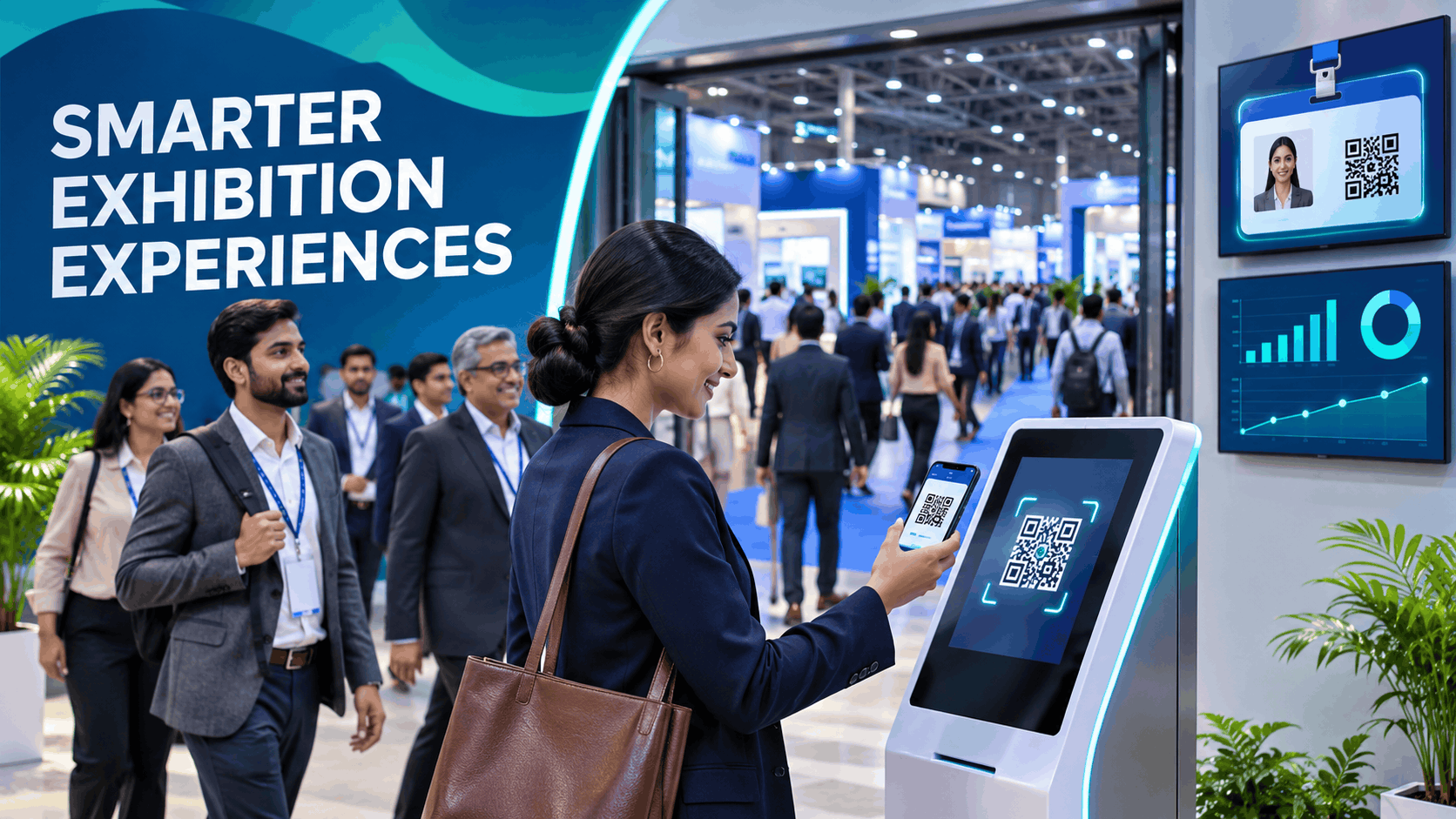
QR codes, digital forms, and customer relationship management (CRM) systems can simplify lead collection and organization. Collect contact information transparently and respect visitor communication preferences.
Classify Your Business Leads
Categorize leads according to their requirements and purchasing interest.
For example:
- Hot Leads: Prospects with immediate requirements or active purchase discussions.
- Warm Leads: Interested buyers who may require additional information or time.
- Future Prospects: Relevant contacts who may develop business requirements later.
Effective lead qualification helps sales teams prioritize valuable opportunities after the exhibition.
8. Build Strategic Business Relationships and Industry Connections
B2B exhibitions offer valuable opportunities beyond direct product sales.
Companies can connect with industry stakeholders who may contribute to future business growth.
These stakeholders include:
- Manufacturers and technology suppliers.
- Domestic and international distributors.
- Procurement professionals and institutional buyers.
- Government and public-sector representatives.
- Investors and potential business partners.
- Industry associations and trade organizations.
- Research institutions and technology collaborators.
Exhibitors should actively participate in relevant networking sessions, conferences, product presentations, and industry discussions.
These interactions can provide market insights and open doors to future collaborations.
9. Develop a Strong Post-Exhibition Follow-Up Strategy
One of the most important stages of exhibition participation begins after the event concludes.
Even high-quality business leads may not translate into commercial opportunities without timely and personalized follow-ups.
A structured follow-up process helps maintain engagement and strengthen relationships with prospective buyers.
Key Post-Exhibition Activities
Organize Collected Leads
Consolidate visitor information, meeting notes, product inquiries, and relevant business requirements into a CRM system.
Send Personalized Thank-You Emails
Acknowledge visitors who interacted with your company and provide information relevant to their discussions.
Schedule Business Meetings
Arrange online or in-person meetings with prospects who expressed serious interest.
Share Product Information and Quotations
Provide catalogs, technical documents, quotations, or product demonstrations according to each buyer’s requirements.
Maintain Consistent Communication
Use appropriate email campaigns, calls, and professional networking to remain connected with prospective customers.
Track Lead Progress
Monitor lead status, follow-up responsibilities, and opportunities moving through the sales pipeline.
The international exhibition association UFI’s exhibitor guidance also emphasizes systematic contact follow-up and long-term measurement of exhibition-generated business results.
10. Measure Exhibition Performance and Return on Investment
Companies should evaluate exhibition participation using measurable outcomes rather than focusing only on booth footfall.
Important performance indicators include:
- Total visitor interactions.
- Number of qualified business leads.
- Scheduled and completed business meetings.
- Product demonstrations conducted.
- Quotations and business proposals generated.
- New distributors or potential partners identified.
- Sales opportunities created.
- Revenue attributed to exhibition-generated customers.
One practical metric is:
Cost per Qualified Lead = Total Exhibition Cost ÷ Number of Qualified Leads
For example, if a company spends ₹3,00,000 on exhibition participation and generates 60 qualified leads, its cost per qualified lead is ₹5,000.
This example is illustrative and does not represent an industry benchmark.
Companies should also track the conversion of exhibition leads into business opportunities and sales over time, particularly in industries with longer purchasing cycles.
11. Common Exhibition Preparation Mistakes to Avoid
Even experienced exhibitors can encounter challenges when preparation is incomplete.
Common mistakes include:
- Participating without clear business objectives.
- Selecting an exhibition that does not match the target audience.
- Underestimating booth development and logistical costs.
- Starting promotional activities too late.
- Failing to train booth representatives.
- Focusing on visitor numbers instead of qualified leads.
- Collecting contacts without recording business requirements.
- Neglecting timely post-event follow-ups.
- Failing to evaluate exhibition performance.
Avoiding these mistakes can improve operational efficiency and the overall effectiveness of exhibition participation.
Conclusion: Prepare Strategically, Exhibit Professionally, and Grow Your Business
Participating in a B2B exhibition is more than a promotional activity. It is an opportunity to showcase your company’s strengths, establish professional relationships, understand market demands, and explore new business prospects.
However, successful participation requires a comprehensive approach covering exhibition selection, goal setting, budgeting, booth design, marketing, team preparation, visitor engagement, and post-event communication.
For manufacturers, startups, technology providers, and other B2B enterprises, industry-specific exhibitions can provide a platform to meet potential buyers, explore partnerships, and introduce innovative solutions.
The key to exhibition success lies not only in attracting visitors but in transforming meaningful interactions into long-term business relationships.
With the right preparation and a focused business development strategy, companies can make exhibition participation a valuable contributor to sustained growth.
Ready to showcase your products and connect with new business opportunities? Explore relevant B2B exhibitions, plan your participation strategically, and take the next step towards expanding your industry network.









Post Comment