Exhibition Stall Booking in India: Complete Guide for First-Time Exhibitors
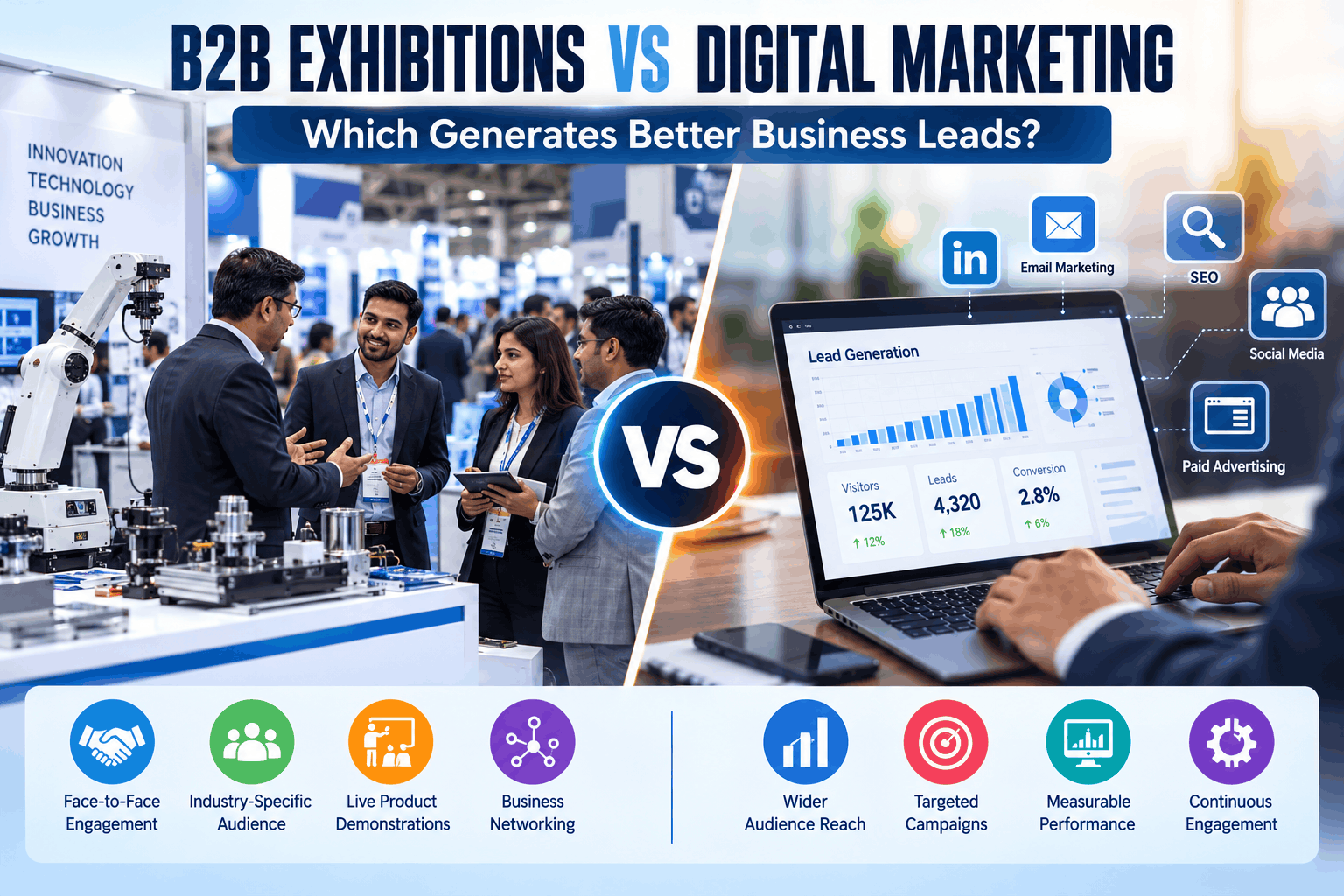
India’s growing business ecosystem offers numerous opportunities for manufacturers, startups, suppliers, exporters, technology providers, and established companies to expand their market presence.
One of the ways businesses can showcase their products, connect with potential buyers, and explore new commercial opportunities is through participation in Business-to-Business (B2B) exhibitions and trade shows.
However, for first-time exhibitors, understanding the exhibition stall booking process in India can seem challenging.
Questions such as which exhibition to choose, what stall size to book, how much exhibition space costs, and what facilities are included often arise before companies make their first investment.
This comprehensive guide explains everything first-time exhibitors should know about booking an exhibition stall in India, selecting the right participation package, preparing for the event, and maximizing business opportunities.
1. What Is Exhibition Stall Booking?
Exhibition stall booking is the process of reserving a designated space at a trade show, business exhibition, or industry-specific event where a company can display its products, technologies, or services.
Exhibition organizers generally provide multiple participation options depending on stall size, location, available facilities, and customization requirements.
By booking an exhibition stall, businesses gain access to a professional platform where they can interact with potential customers, demonstrate their offerings, and establish relationships with industry stakeholders.
For companies entering new markets or introducing innovative solutions, exhibitions can serve as a valuable business development opportunity.
2. Why Should Businesses Book Exhibition Stalls in India?
India hosts trade exhibitions across industries such as manufacturing, engineering, electronics, artificial intelligence, renewable energy, automotive components, healthcare, defence, and industrial automation.
Participating in relevant exhibitions can help businesses achieve several objectives.
Increased Brand Visibility
Exhibitions allow companies to present their brands, products, and capabilities to an industry-focused audience.
Direct Interaction with Potential Buyers
Businesses can communicate with potential customers, procurement professionals, distributors, and decision-makers in a professional environment.
Product Demonstrations
Exhibitors can demonstrate product features, explain technical capabilities, and address customer questions in real time.
Business Networking
Trade shows provide opportunities to connect with manufacturers, suppliers, technology providers, associations, and potential partners.
Market Expansion
Exhibitions can help companies explore new customer segments, identify distribution opportunities, and understand emerging industry requirements.
For first-time exhibitors, choosing the right event and preparing effectively are essential to making participation worthwhile.
3. How to Choose the Right Exhibition in India
Before booking a stall, companies should identify exhibitions that align with their products, services, and target customers.
Important factors to evaluate include:
Industry Relevance: Select exhibitions focused on your business sector or related industries.
Target Audience: Examine the expected visitor categories, such as manufacturers, buyers, distributors, procurement teams, or technology professionals.
Location and Accessibility: Consider exhibition venues in major business destinations such as New Delhi, Mumbai, Bengaluru, Hyderabad, Chennai, and other industrial centers.
Organizer Credibility: Review the organizer’s background, event information, previous editions, and participation terms.
Business Opportunities: Look for relevant networking sessions, conferences, buyer meetings, and product demonstration opportunities.
Exhibitor Benefits: Understand the marketing visibility, promotional support, visitor engagement opportunities, and other services offered.
Choosing an exhibition that attracts your target industry audience is often more important than simply choosing the largest event.
4. Understanding Different Types of Exhibition Stalls
Before confirming a booking, exhibitors should understand the available participation formats.
A. Shell Scheme Exhibition Stall
A shell scheme stall is a standard exhibition booth package that usually includes basic infrastructure provided by the organizer or official contractor.
Depending on the event, the package may include:
- Partition walls and basic booth structure.
- Company name fascia.
- Carpeted flooring.
- Tables and chairs.
- Basic lighting.
- Electrical socket or limited power provision.
- Waste bin and other standard facilities.
Shell scheme stalls are often suitable for startups, SMEs, and first-time exhibitors looking for a convenient, ready-to-use booth format.
B. Bare Space Exhibition Stall
Bare space refers to an allocated exhibition floor area without a standard pre-built booth.
The exhibitor is responsible for arranging the booth structure, branding, furniture, electrical requirements, and custom fabrication, subject to organizer regulations.
Bare space is generally preferred by companies requiring larger or customized displays.
C. Custom-Designed Exhibition Booth
A custom booth is developed according to a company’s specific brand identity and product presentation requirements.
Depending on exhibition regulations, customization can include branded structures, meeting rooms, digital displays, interactive demonstration areas, and specialized product installations.
Custom-designed booths may offer more design flexibility but generally require additional planning and expense.
D. Corner and Multiple-Open-Side Stalls
Some exhibitions offer booths with two or more open sides.
These locations may provide additional visibility and visitor access.
However, organizers may charge premium rates for certain positions, and actual availability depends on the exhibition floor plan.
5. How to Choose the Right Stall Size and Location
Choosing the right stall size is an important part of exhibition planning.
Stall requirements depend on the products being displayed, number of staff members, expected visitor interactions, and available budget.
Common booth dimensions may include:
- 9 sq. m (3 m × 3 m): Suitable for compact displays, brochures, and small business meetings.
- 12 sq. m (3 m × 4 m): Offers additional space for products and visitor engagement.
- 18 sq. m (3 m × 6 m): Can accommodate larger demonstrations or multiple display areas.
- 36 sq. m (6 m × 6 m): Suitable for larger displays, technical demonstrations, or custom-built installations.
These sizes are illustrative. Minimum booking areas and permitted dimensions vary by exhibition.
Tips for Selecting a Stall Location
- Review the official exhibition floor plan.
- Consider proximity to relevant industry zones.
- Evaluate visitor movement and nearby activity areas.
- Check the number of open sides.
- Verify access for product installation and removal.
- Ensure sufficient space for staff and buyer interactions.
An appropriately positioned stall with a functional layout can support visitor engagement throughout the exhibition.
6. Exhibition Stall Booking Cost in India
One of the most frequently asked questions by first-time exhibitors is:
How much does it cost to book an exhibition stall in India?
Exhibition stall prices vary depending on several factors, including:
- Exhibition category and industry.
- Venue and event location.
- Stall size and booth type.
- Number of open sides.
- Facilities included in the participation package.
- Booking period and available discounts.
- Additional branding and technical requirements.
Organizers commonly quote participation rates per square metre.
For example, if an exhibition charges ₹12,000 per sq. m for shell scheme space, the basic space cost of a 9 sq. m stall would be:
9 sq. m × ₹12,000 = ₹1,08,000
This is an illustrative calculation, not a standard market rate.
Additional costs may include applicable GST, extra electricity, internet, furniture, branding, booth customization, logistics, travel, and accommodation.
Before confirming participation, exhibitors should request a written quotation with a clear breakdown of inclusions, optional charges, taxes, and payment terms.
7. Step-by-Step Exhibition Stall Booking Process in India
While individual organizers may follow different procedures, the general booking process involves the following steps.
Step 1: Identify the Right Exhibition
Research upcoming exhibitions relevant to your industry and business objectives.
Review event dates, venue details, product categories, exhibitor opportunities, and visitor profiles.
Step 2: Contact the Exhibition Organizer
Visit the official event website or contact the organizer’s exhibition sales team.
Request the exhibitor brochure, participation charges, floor plan, stall availability, and terms and conditions.
Step 3: Select Your Preferred Stall
Choose your required stall size, type, and preferred location.
Discuss any additional requirements, such as corner access, product demonstration space, storage, or specialized electrical connections.
Step 4: Complete the Booking Application
Fill out the exhibitor registration or stall booking form with the required company and contact information.
Carefully review all information before submission.
Step 5: Review Participation Charges and Terms
Verify the quotation, payment schedule, cancellation conditions, inclusions, and applicable charges.
Confirm whether the requested location is being held provisionally or has been officially allocated.
Step 6: Complete the Payment Process
Make the required payment through the organizer’s approved payment method.
Payments should be made only against verified organizer details and official documentation.
Step 7: Obtain Written Booking Confirmation
Request a formal confirmation, receipt or invoice, and allotted stall details.
Keep the booking documents available for future coordination.
Step 8: Follow the Exhibitor Manual
The organizer may provide an exhibitor manual containing booth construction guidelines, technical forms, branding rules, setup schedules, safety requirements, and operational instructions.
Review it carefully and complete all applicable submissions within the specified deadlines.
8. Documents and Information Required for Stall Booking
First-time exhibitors should prepare essential company information before completing the registration process.
Commonly requested details include:
- Registered company or organization name.
- Business address and contact information.
- Authorized representative’s name and designation.
- Company website.
- Product or service categories.
- GST registration details, where applicable.
- Company logo and profile.
- Billing details.
- Additional technical or booth requirements.
Some exhibitions may also request industry-specific declarations, product information, or additional documentation.
Document requirements vary by organizer, event category, and exhibitor status.
9. How to Prepare Your Exhibition Stall After Booking
After completing the booking process, exhibitors should focus on making their participation productive.
Finalize Booth Design and Branding
Ensure your company logo, key messages, product displays, and promotional graphics are clearly visible.
Prepare Marketing Materials
Create updated product brochures, catalogs, business cards, presentations, and digital information resources.
Plan Product Demonstrations
Organize the necessary equipment, product samples, technical materials, and demonstration schedules.
Train Your Exhibition Team
Prepare representatives to introduce the company, explain offerings, answer buyer questions, and capture relevant business inquiries.
Promote Your Participation
Use LinkedIn, email campaigns, company websites, and industry communication channels to announce your participation.
Include the exhibition name, dates, venue, and confirmed stall details.
Schedule Meetings Before the Exhibition
Invite existing customers and potential buyers to visit your booth, and arrange meetings in advance.
Effective preparation can help companies make better use of their exhibition investment.
10. Common Mistakes First-Time Exhibitors Should Avoid
Several common mistakes can reduce the effectiveness of exhibition participation.
Booking Without Research: Choosing an exhibition without checking its audience relevance.
Ignoring the Floor Plan: Selecting a booth without considering visitor movement and display requirements.
Overlooking Additional Costs: Failing to budget for taxes, logistics, utilities, and promotional materials.
Missing Submission Deadlines: Delaying design approvals, exhibitor forms, or technical requests.
Insufficient Pre-Event Promotion: Relying entirely on general exhibition visitors rather than inviting potential customers.
Unprepared Staff: Sending representatives without adequate product knowledge or lead qualification processes.
Weak Follow-Up Planning: Collecting inquiries but failing to contact prospects after the exhibition.
Avoiding these mistakes can help businesses improve their overall exhibition experience.
11. How to Maximize Business Leads and Exhibition ROI
Booking an exhibition stall is only the first stage of successful participation.
To maximize business opportunities, companies should focus on visitor engagement, lead quality, and post-event conversion.
During the Exhibition
- Engage actively with relevant visitors.
- Conduct product demonstrations and business discussions.
- Understand buyer requirements.
- Capture accurate contact information with appropriate consent.
- Record product interests and meeting outcomes.
- Identify potential distributors and business partners.
After the Exhibition
- Categorize leads according to their business potential.
- Send personalized follow-up emails.
- Share requested quotations and product information.
- Schedule meetings with qualified prospects.
- Track opportunities through a CRM system.
- Evaluate leads, conversions, and eventual revenue.
Companies should measure performance based on meaningful business outcomes, not only the number of visitors who approached their stall.
12. Why Early Exhibition Stall Booking Matters
Booking exhibition space well in advance can provide several practical advantages.
Early planning may help companies:
- Access a wider selection of available stall locations.
- Benefit from early booking offers where available.
- Allocate sufficient time for stall design and fabrication.
- Prepare logistics and technical installations.
- Launch promotional campaigns before the event.
- Schedule meetings with prospective customers.
- Manage budgets and approval processes more effectively.
However, preferred locations, discounts, and specific booking advantages depend on organizer policies and actual availability.
Companies should check official announcements for booking deadlines and participation conditions.
Conclusion: Take the First Step Towards Successful Exhibition Participation
Exhibition stall booking in India can be a valuable investment for businesses looking to strengthen brand visibility, showcase innovations, connect with buyers, and develop industry partnerships.
For first-time exhibitors, the process becomes easier with proper research, careful budgeting, informed stall selection, and timely coordination with exhibition organizers.
From choosing the right trade show and understanding stall types to preparing marketing materials and following up with prospects, every stage contributes to the effectiveness of exhibition participation.
A successful exhibition experience begins with the right planning, but its real value comes from turning business interactions into meaningful commercial opportunities.
Whether you are a startup, SME, manufacturer, exporter, or technology provider, participating in relevant B2B exhibitions can help your company build connections and explore new growth opportunities.
Ready to exhibit your products and connect with potential business partners? Explore upcoming B2B exhibitions in India, request stall availability, and begin planning your next exhibition participation.







Post Comment